
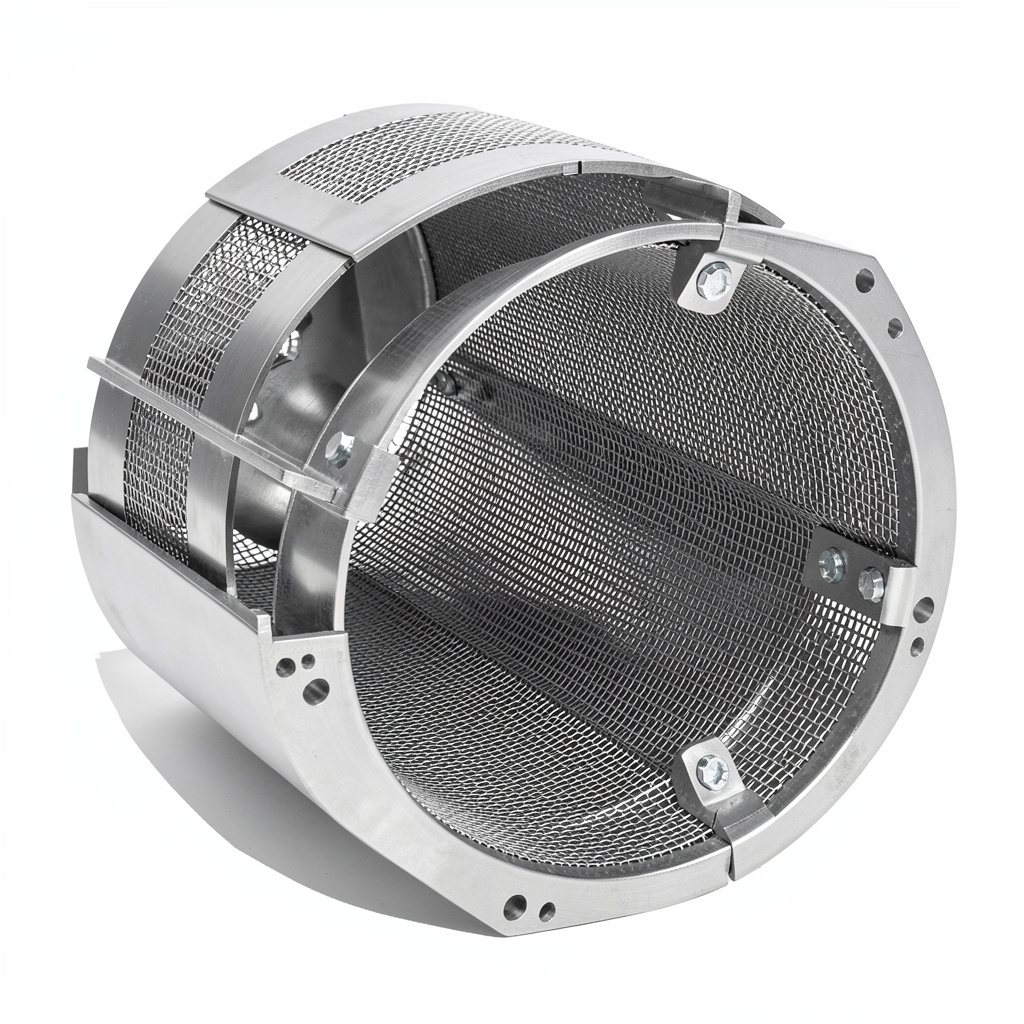
Cooling towers operate under sustained conditions of forced convection and continuous liquid recirculation, which inherently promote droplet entrainment in the exhaust air stream. This phenomenon, commonly defined as drift, consists of fine liquid particulates containing dissolved solids and treatment chemicals. Uncontrolled drift contributes to water loss, environmental discharge concerns, and potential fouling or corrosion of downstream equipment. The integration of an appropriately specified cooling tower drift eliminator is therefore a necessary design consideration for maintaining process efficiency and regulatory compliance.
Drift control performance is not solely a function of installation but of separation efficiency, aerodynamic resistance, and durability under process conditions. The selection of a drift eliminator configuration must be approached as a performance optimization problem rather than a purely mechanical choice.
Cooling Tower Mist Eliminators: Functional Overview
A cooling tower mist eliminator is a phase separation device designed to remove entrained liquid droplets from an air stream prior to discharge. The operating principle relies on inertial impaction: the airflow is redirected through a series of directional changes, forcing droplets to deviate from the gas phase trajectory, contact solid surfaces, and coalesce into larger masses that can be drained and returned to the system.
The effectiveness of a drift eliminator is governed by geometric configuration, residence time, airflow distribution, and material properties. Proper implementation reduces visible plume formation, minimizes chemical carryover, and limits process water losses.
Single-Stage Cooling Tower Drift Eliminator: Design Characteristics
Single-stage cooling tower drift eliminator systems consist of a single layer of vane structures arranged to induce directional changes in the airflow path. These units are designed to remove larger droplets through relatively simple flow redirection.
From an engineering standpoint, single-stage designs offer reduced pressure drop and straightforward installation. They are typically appropriate for systems operating at moderate air velocities and where drift control requirements are not highly stringent.
However, separation efficiency declines as droplet size decreases. Fine mist particles may remain entrained due to insufficient interaction with the vane surfaces. Performance is sensitive to vane spacing, airflow uniformity, and operating velocity.
Multi-Stage Cooling Tower Mist Eliminator: Design Characteristics
Multi-stage cooling tower mist eliminator systems incorporate multiple sequential layers of separation media. Each stage introduces additional directional changes, increasing the probability of droplet impaction and coalescence.
This configuration significantly enhances capture efficiency, particularly for submicron and fine droplets. The staged arrangement effectively increases surface area interaction and residence time within the eliminator assembly.
The tradeoff is an increase in system resistance. Higher pressure drop must be accounted for in fan selection and overall energy consumption. Despite this, multi-stage systems are often justified in high-capacity or tightly regulated installations where minimal drift is required.
Comparative Efficiency Analysis
The primary distinction between single-stage and multi-stage drift eliminator systems lies in their collection efficiency across droplet size distributions. Single-stage configurations are effective for larger droplets but exhibit reduced performance for finer particulates.
Multi-stage designs provide superior separation efficiency due to repeated flow redirection and increased surface interaction. This results in lower drift emissions and improved environmental performance metrics.
However, increased efficiency is accompanied by higher aerodynamic resistance. A rigorous evaluation of pressure drop versus separation performance is required to ensure optimal system design and energy utilization.
Application Considerations: System Selection Criteria
Selection between single-stage and multi-stage configurations should be based on process-specific requirements:
- Single-stage systems are appropriate for lower airflow velocities and applications with moderate drift limitations.
- Multi-stage systems are recommended for high-throughput cooling towers or installations subject to strict emission controls.
The decision framework should incorporate both capital and operating considerations, including long-term energy costs and maintenance requirements.
Key Parameters Influencing Performance
The effectiveness of a cooling tower drift eliminator is influenced by several interdependent variables:
- Air velocity and distribution profile
- Droplet size spectrum and concentration
- Vane geometry and spacing configuration
- Material resistance to thermal, chemical, and mechanical stress
- Maintenance intervals and fouling control
Optimization of these parameters is essential to sustain separation efficiency and prevent performance degradation over time.
Conclusion
Effective drift mitigation requires a balanced approach that considers separation efficiency, pressure drop, and system integration. Both single-stage and multi-stage cooling tower mist eliminator designs provide viable solutions, with selection dependent on operating conditions and compliance requirements.
Kimre Clean Air Technology develops and supplies engineered separation technologies for industrial applications requiring high-efficiency droplet removal. Their expertise in phase separation and filtration supports the implementation of reliable cooling tower drift eliminator systems designed for sustained performance and operational stability.

