
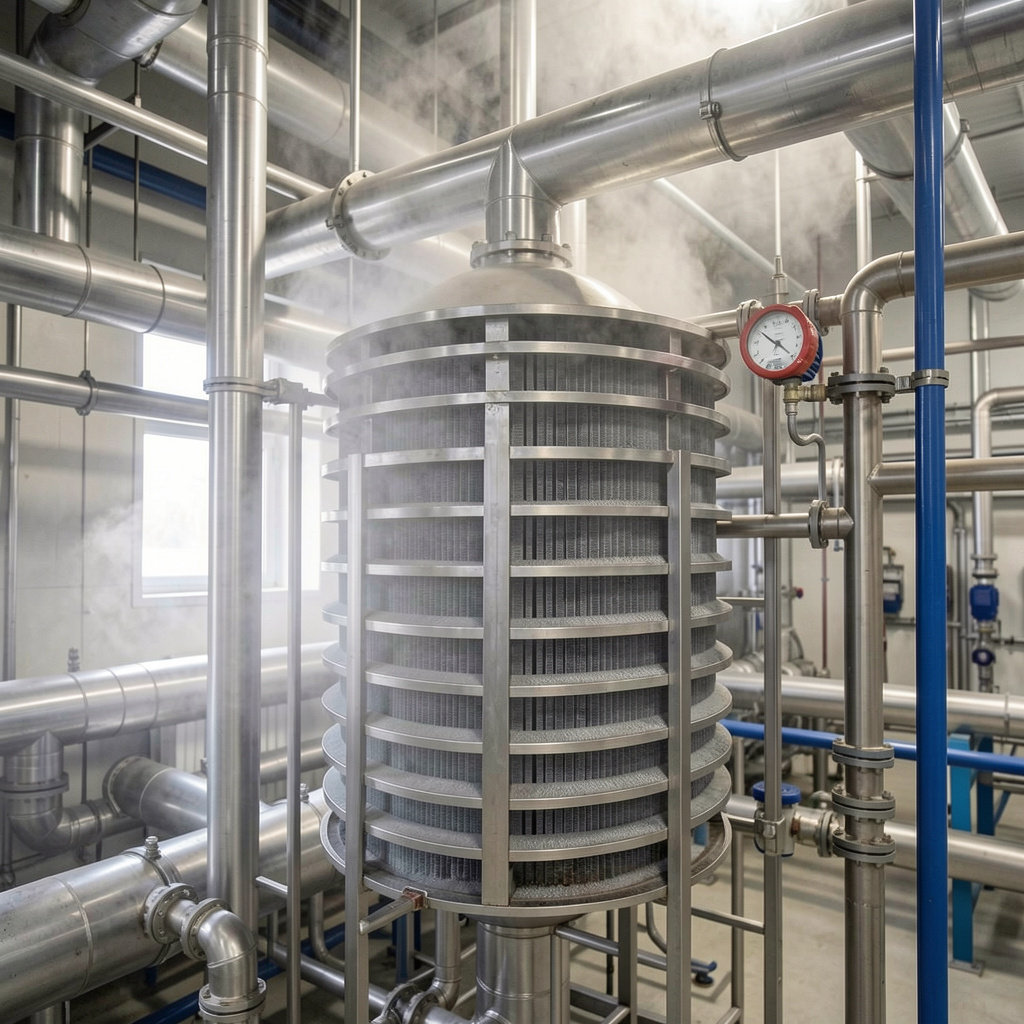
Mist eliminator manufacturers typically design their standard product lines to accommodate common process conditions. They use mesh pads, vanes, and fiber beds in standard sizes to handle a wide variety of droplet sizes, chemical compositions, and vessel configurations. However, some processes fall outside these typical parameters. Unusual chemistry, a wide range of droplet sizes, tight vessel shapes, heavy liquid loads, or stricter emissions requirements can complicate selection.
In those cases, when a standard product no longer helps, opting for a custom mist eliminator is a smart choice.
People Also Ask
What makes a mist eliminator custom instead of standard?
Custom mist eliminators are built around a specific vessel's dimensions, chemistry, and droplet distribution rather than a manufacturer's pre-set catalog sizes.
How do I know if I need a custom mist eliminator?
If chemistry, droplet size, liquid loading, or geometry falls outside standard ranges, or emissions limits exceed published data, custom engineering becomes necessary.
Where Standard Mist Eliminators Work Well
Many process vents, scrubbers, absorbers, and towers run well on standard mist eliminator types for industrial gas streams, including mesh pads, vanes, and fiber beds.
More engineering adds cost and lead time without improving performance if droplet size, liquid loading, chemistry, and vessel dimensions are within published limits.
When Process Chemistry Changes the Material Choice
Some acids, solvents, and high-temperature gases exceed polypropylene or PET resistance. Or PFA, ETFE, or specialty PVDF may be required.
Not all mist eliminator suppliers carry these materials, so check compatibility before making your final selection. Read our guide on why material choice drives mist eliminator service life to see what the wrong resin costs in acid service.
When One Media Type Cannot Handle the Full Droplet Range
When a gas stream carries both coarse spray and sub-micron aerosol, fine mist removal with mesh pads or fiber bed candles is rarely a one-media decision, since each technology works best at a different droplet size.
An engineered mist eliminator might combine media layers or stages so each section handles a narrower droplet range.
When Vessel Geometry Limits Standard Options
Unusual diameters, nozzle locations, or vessel shapes preclude using standard sizes. An engineered mist eliminator can be custom-fitted to your vessel.
Mist Eliminator Retrofitting Into Existing Equipment
New mist eliminators are often retrofitted into an existing vessel. This means the mist eliminator must be custom-fitted and configured to the existing vessel's dimensions and support structure, since the vessel shell is not replaced during retrofitting. Retrofits are often prompted by recurring problems, as shown in our guide to maintenance issues that cause downtime.
Limited Height Or Access Openings
Limited headroom or manway openings may require modular pads built in multiple sections and assembled within the vessel.
When Liquid Loading Pushes Beyond Standard Limits
Heavy liquid carryover from spray scrubbers or high-recirculation towers often overwhelms standard drainage capacity. Custom void fraction and layering handle the volume without flooding.
When Standard Efficiency Is Not Enough
Permits tightening beyond published catalog efficiency curves often call for custom fiber diameter and void fraction, tuned to the droplet size driving the exceedance. Smelting, pickling and surface finishing all run into this. See how metal processing plants meet tightening limits.
When Fouling Service Requires Composite Media
Heavy particulate loading fouls standard media fast, and the common causes of mist eliminator fouling vary by deposit type, from scale to sticky organics.
What Custom Engineering Involves
Custom mist eliminator design follows a defined process, not guesswork.
Process Data Review
Engineers review flow rate, droplet size, liquid loading, chemistry, and dimensions before proposing a design.
Media And Geometry Design
Fiber diameter, void fraction, and layer structure get matched to actual conditions, not a generic rating.
Pilot And Test Work
Some applications warrant lab or field testing to confirm efficiency before fabrication.
Fabrication And Field Support
The made-to-order mist eliminator is built to exact drawings, then supported through installation.
What To Supply When Requesting A Custom Design
Share gas flow range, droplet size estimate, liquid loading, chemical exposure, vessel dimensions, and target efficiency. Kimre's engineering team reviews this data before quoting a design, and the more complete it is, the fewer iterations needed.
Standard First, Custom When The Process Demands It
Standard mist eliminators handle most process duties well. Custom engineering becomes necessary when chemistry, droplet distribution, vessel geometry, liquid loading, or emissions limits fall outside standard ranges. A qualified manufacturer reviews your process data before recommending either path.
Frequently Asked Questions
What is a custom-designed mist eliminator?+
Media engineered around a specific process, matching fiber diameter, void fraction, and material to actual conditions instead of a catalog part.
How much more does an engineered mist eliminator cost?+
Cost varies by complexity, but engineered designs typically cost more due to added engineering, testing, and non-standard materials.
Does a standard mist eliminator allow retrofitting with custom media?+
Yes. A retrofit often replaces standard media inside an existing housing with custom-engineered media matched to current conditions.
Do all mist eliminator manufacturers offer custom engineering?+
No. Some suppliers only offer catalog products. Confirm a manufacturer's in-house design and fabrication capability first.
How long does it take to get a custom mist eliminator?+
Lead time depends on complexity, but custom projects generally add several weeks to standard lead times.

