
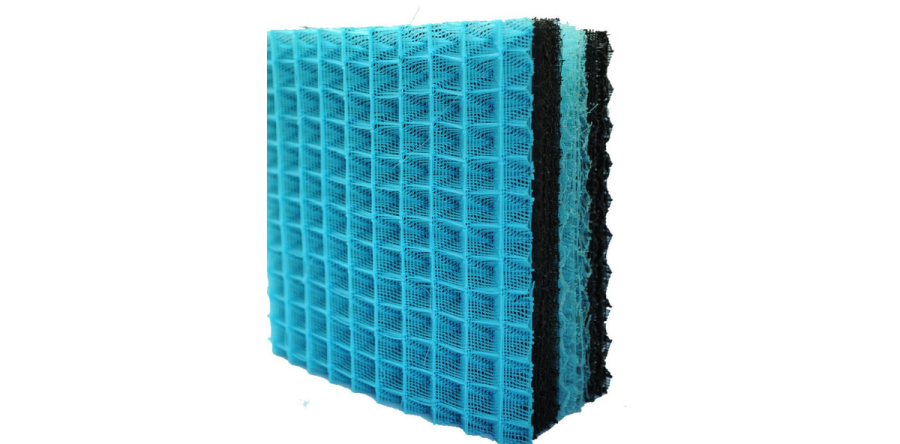
Industrial gas streams rarely leave a process in a clean, dry state. Whether in acid production, fertilizer processing, or metal finishing, entrained liquid droplets and fine aerosols are an inherent byproduct of mass transfer, chemical reaction, and phase change. Left uncontrolled, these droplets contribute to downstream corrosion, fouling, visible emissions, and regulatory non-compliance.
A properly engineered mist eliminator is therefore not a secondary component—it is a critical separation device within the overall process system. The function is straightforward in principle: remove liquid droplets from a gas stream. In practice, however, performance depends on droplet size distribution, gas velocity, fluid properties, and the selected separation mechanism.
For facilities evaluating solutions from mist eliminator manufacturers, understanding the operating principles and limitations of each technology is essential. The three most widely applied systems—mesh pads, fiber beds, and chevron vanes—each address a distinct range of process conditions.
People Also Ask
What does a mist eliminator do in industrial processes?
A mist eliminator removes liquid droplets from gas streams to prevent corrosion, protect equipment, and maintain environmental compliance in industrial operations.
What is the difference between a mesh pad and a fiber bed mist eliminators?
Mesh pad systems remove larger droplets through coalescence, while fiber bed systems capture very fine aerosols and submicron droplets with significantly higher filtration efficiency.
The Role of the Industrial Mist Eliminator
An industrial mist eliminator is designed to separate liquid from vapor by promoting droplet capture, coalescence, and drainage. Effective removal improves:
- Equipment longevity by reducing corrosive carryover
- Process stability through consistent gas composition
- Emission control performance under regulatory constraints
The challenge lies in the fact that droplet behavior is not uniform. Large droplets (>10 microns) respond readily to inertial forces, while submicron aerosols require diffusion-dominant capture mechanisms. No single device is optimal across all regimes.
Mesh Pad Mist Eliminators: Coalescence Under Moderate Conditions
Mesh pad systems remain a standard offering among mist eliminator manufacturers due to their simplicity and versatility. Constructed from knitted wire or polymer filaments, these devices provide a tortuous path that promotes impaction and coalescence.
As the gas stream passes through the mesh:
- Droplets collide with filament surfaces
- Coalescence occurs as droplets merge
- Larger droplets form and drain under gravity
Mesh pads are well-suited for:
- Moderate gas velocities
- Droplet sizes typically above 5–10 microns
- Applications such as distillation columns, scrubbers, and evaporators
Their appeal lies in low capital cost, moderate pressure drop, and mechanical simplicity. However, efficiency declines significantly when dealing with fine aerosols or acid mist, where capture mechanisms must extend beyond inertial impaction.
Fiber Bed Mist Eliminators: High-Efficiency Aerosol Capture
Where fine particulate and acid mist are present, fiber bed systems represent the high-efficiency end of industrial mist eliminator design.
These systems utilize densely packed fiber media engineered to maximize surface area and optimize multiple capture mechanisms, including:
- Interception
- Brownian diffusion
- Inertial impaction (for larger fractions)
As droplets contact the fiber matrix, they accumulate and coalesce until gravitational drainage occurs. The result is exceptionally high removal efficiency, even for submicron aerosols.
Fiber bed systems are commonly applied in:
- Sulfuric acid plants
- Electroplating operations
- Fertilizer and chemical processing facilities
Among experienced mist eliminator manufacturers, fiber bed technology is often the preferred solution when stringent emission limits and fine aerosol control are required. The tradeoff is typically a higher pressure drop and more specialized design considerations, including fiber selection and bed depth.
Chevron Vane Mist Eliminators: Mechanical Separation at High Velocity
Chevron vane systems operate on a fundamentally different principle. Rather than relying on a fibrous medium, they use directional changes in the gas stream to induce droplet separation.
The gas passes through a series of angled vanes, forcing repeated changes in direction. Due to inertia:
- Droplets deviate from the gas path
- Impact vane surfaces
- Coalesce and drain from the system
Chevron vane mist eliminators are particularly effective in:
- High-velocity gas streams
- Applications with larger droplet sizes
- Situations where low pressure drop is critical
Their open geometry reduces the risk of fouling and allows for robust operation in demanding environments. However, they are not suitable for fine aerosol removal, where fiber-based systems provide superior performance.
Comparative Performance Considerations
From an engineering standpoint, the selection of a mist eliminator should be based on measurable process parameters rather than preference or precedent.
| Technology | Best For | Efficiency Range | Pressure Drop | Limitations |
| Mesh Pad | Medium droplets, moderate flow | Moderate | Low–Moderate | Limited fine aerosol capture |
| Fiber Bed | Submicron aerosols, acid mist | Very high | Moderate–High | Higher complexity |
| Chevron Vane | Large droplets, high velocity | Moderate (coarse range) | Low | Ineffective for fine mist |
Key variables to evaluate include:
- Droplet size distribution
- Superficial gas velocity
- Chemical composition and corrosivity
- Allowable pressure drop
- Maintenance and fouling potential
Matching Technology to Process Requirements
There is no universal solution in industrial mist eliminator design. Systems must be engineered to the process, not selected from a catalog without context.
Facilities that engage experienced mist eliminator manufacturers and provide accurate process data—particularly aerosol characterization and operating conditions—are more likely to achieve:
- Stable long-term performance
- Reduced maintenance frequency
- Consistent emission compliance
Engineered Filtration with Kimre™ Clean Air Technology
High-efficiency aerosol control requires more than standard equipment—it requires engineered filtration media and application-specific system design.
Kimre™ Clean Air Technology develops advanced fiber bed mist eliminator systems designed for high-efficiency removal of acid mist and submicron aerosols in demanding industrial environments. These systems are engineered to maintain consistent pressure drop, high capture efficiency, and long-term operational stability.
For facilities evaluating industrial mist eliminator solutions, Kimre™ provides the technical depth and filtration expertise required to address complex emission control challenges with confidence. Contact us today.

