
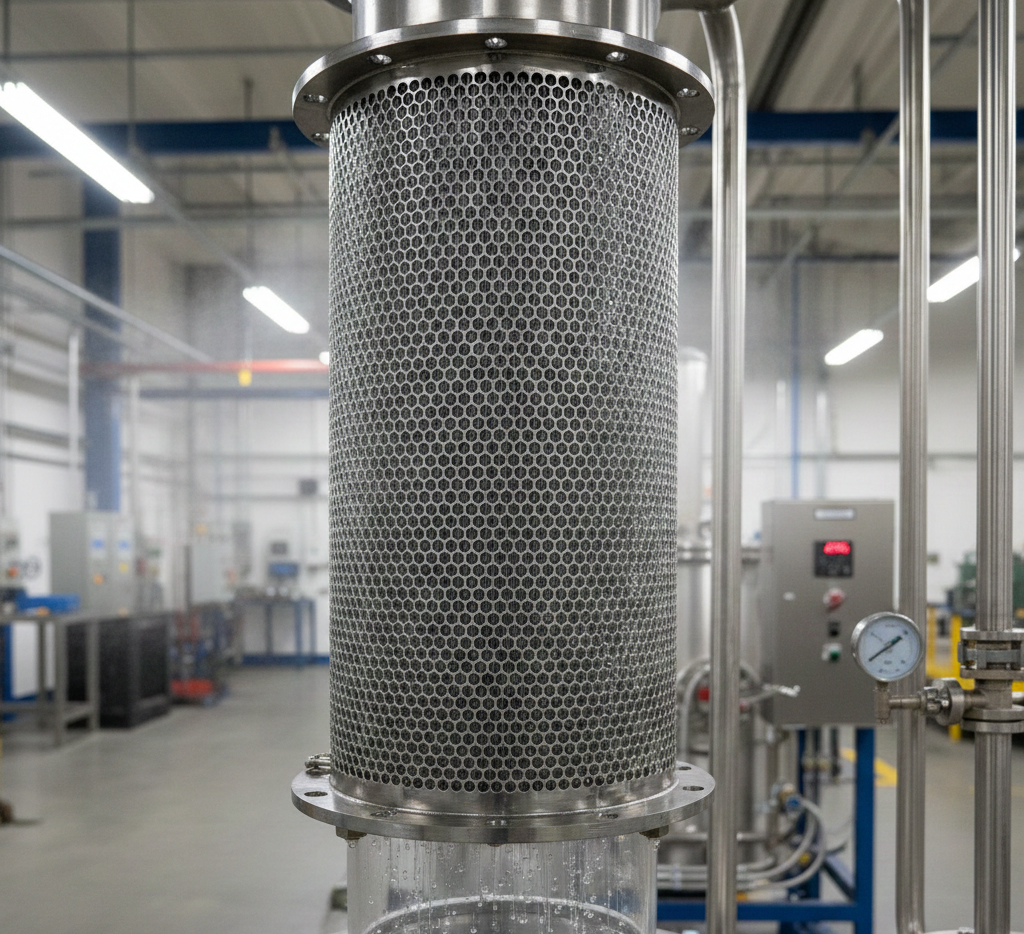
Complex chemical processes require precise control of gas and air streams to protect product quality, maintain equipment integrity, and ensure regulatory compliance. Even trace concentrations of fine particulates or liquid aerosols can disrupt reaction kinetics, contaminate process streams, or initiate fouling in downstream equipment. As a result, high-performance filtration technologies such as the Candle Filter are essential for achieving stable and reliable plant operations.
Among these technologies, Candle filters are widely applied in chemical processing environments that demand high separation efficiency under elevated temperatures, pressures, and chemically aggressive conditions. Their ability to remove fine solids and coalesced liquid mists makes them a critical component in modern gas and vapor handling systems engineered by experienced Candle Filter manufacturers.
What Is a Candle Filter and How Does It Work?
A Candle Filter consists of vertical, cylindrical filtration elements installed within a pressure-rated housing. Process gases or vapors flow through a porous filtration medium, where solid particulates and entrained liquid droplets are captured on the surface or within the depth of the media. The cleaned stream exits the vessel, while collected material is removed through gravity drainage, back-pulse cleaning, or other controlled regeneration mechanisms. This configuration supports continuous operation, uniform flow distribution, and predictable filtration performance across a wide range of operating conditions and process chemistries.
Why Chemical Processes Demand High-Efficiency Candle Filters
Chemical production processes often involve sensitive reactions, catalysts, and tightly controlled material balances. Particulate carryover or mist entrainment can deactivate catalysts, foul heat transfer surfaces, and compromise downstream separation or recovery units. In gas handling systems, insufficient Candle Filter performance may also result in off-spec emissions or reduced equipment life.
High-efficiency Candle Filters are therefore essential to protect critical assets, maintain process stability, and meet environmental and safety requirements.
Several design characteristics contribute to the effectiveness of modern Candle Filter systems. The vertical orientation promotes even flow distribution and efficient drainage of coalesced liquids. High surface-area-to-volume ratios enable fine particulate capture while maintaining a manageable pressure drop. Modular element configurations engineered by leading Candle Filter manufacturers also allow for scalability and customization to meet specific process demands.
Filtration Media Options Used in Candle Filters
Candle Filters are available with a wide range of filtration media, including sintered metals, polymeric fibers, ceramics, and composite structures. Media selection is dictated by chemical compatibility, operating temperature and pressure, particulate size distribution, and required removal efficiency. Proper media selection ensures long service life and consistent filtration performance under demanding chemical process conditions.
Capturing Fine Particulates and Liquid Mists in Chemical Processing
In gas-phase chemical applications, Candle Filters effectively remove submicron solids while coalescing entrained liquid aerosols. As mist droplets impinge on the filter media, they merge into larger droplets that drain from the element under gravity. This dual capability allows a single Candle Filter stage to perform both particulate filtration and mist elimination.
Also read: How Candle Filters Capture Mists and Fine Particulates
Integration with Fiber Bed Mist Eliminators and Multi-Stage Systems
For applications requiring ultra-high removal efficiency, Candle Filters are frequently incorporated into multi-stage separation systems. When used as a primary or intermediate stage, they reduce particulate and liquid loading to downstream equipment and stabilize flow conditions. In final-stage configurations, pairing a Candle Filter with a Fiber Bed Mist Eliminator enables efficient removal of submicron aerosols that escape upstream separation stages.
Impact on Process Stability and Equipment Protection
By preventing particulate and liquid carryover, Candle Filters help maintain steady-state operation and protect critical equipment such as compressors, heat exchangers, and ducting. Reduced fouling and corrosion extend equipment life, minimizes unplanned shutdowns, and improve overall process reliability.
Pressure Drop Control and Energy Efficiency Benefits
Optimized element geometry and media permeability allow Candle Filters to achieve high capture efficiency while maintaining controlled pressure drop. Stable differential pressure reduces energy consumption and minimizes load on blowers or compressors, supporting long-term operational efficiency.
Maintenance and Operational Benefits of Candle Filters
Modern Candle Filter systems are designed for straightforward maintenance, with accessible elements and defined cleaning or replacement intervals. Automated back-pulse or wash systems further reduce manual intervention, lowering maintenance costs while supporting continuous operation.
Regulatory and Environmental Compliance Considerations
Effective particulate and mist removal using Candle Filters supports compliance with air emission limits, occupational exposure standards, and environmental regulations. By capturing contaminants prior to release, these systems help chemical processing facilities meet regulatory obligations while reducing environmental impact.
Common Application Examples in Chemical Plants
Typical applications for Candle Filters include reactor vent filtration, dryer exhaust treatment, solvent recovery systems, absorber and stripper vents, and intermediate process venting. These use cases demonstrate the versatility of Candle Filter technology across a wide range of chemical processing operations.
Choosing the Right Candle Filter Manufacturer and Design
Selecting the appropriate Candle Filter system requires careful evaluation of particulate characteristics, mist loading, chemical compatibility, operating conditions, and cleaning requirements. Collaboration with experienced Candle Filter manufacturers ensures the selected design aligns with process performance objectives and long-term reliability goals.
Why Candle Filters Are Essential for High-Efficiency Process Filtration
Candle Filters play a central role in maintaining filtration efficiency, process stability, and regulatory compliance in chemical processing operations. Their ability to remove fine particulates and liquid mists, integrate with Fiber Bed Mist Eliminators, and operate reliably under severe conditions makes them an essential element of modern process design.
With decades of experience in high-performance separation technologies, Kimre Clean Air Technology delivers engineered Candle Filter and Fiber Bed Mist Eliminator systems tailored to complex chemical process requirements. Contact Kimre to evaluate filtration challenges and implement solutions that support sustained operational performance and compliance.

