
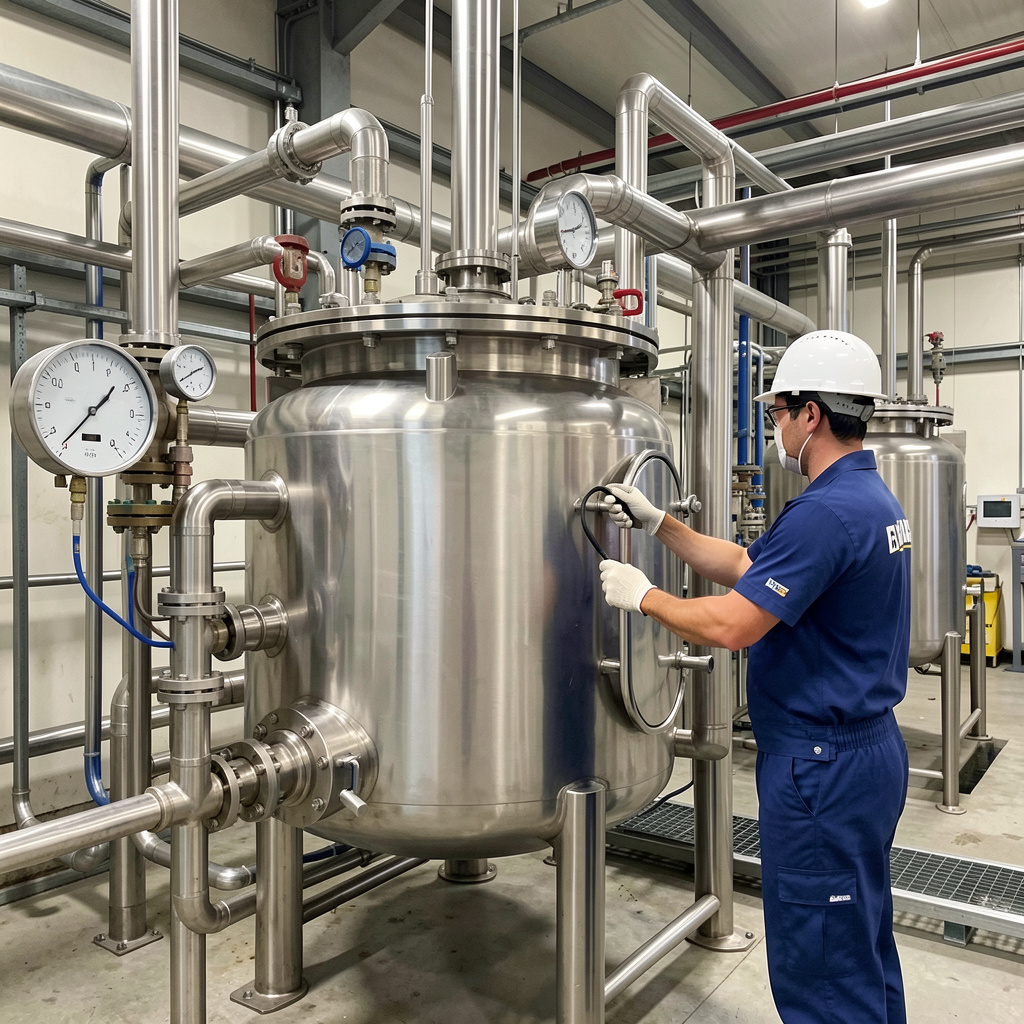
Liquid–liquid separation is a foundational requirement in oil, gas, and chemical processing, directly influencing product quality, equipment integrity, and environmental performance. When immiscible phases, such as oil and water, are not effectively separated, even minor inefficiencies can cascade into process instability, off-spec output, and increased downstream treatment burdens. These risks intensify as fluid compositions become more complex and operating conditions push beyond the limits of traditional separation methods.
Engineered coalescing systems provide a structured approach to overcoming these challenges. By encouraging controlled droplet interaction and growth within defined hydraulic conditions, liquid-liquid coalescers enable faster and more reliable phase disengagement than gravity-based systems alone. This controlled separation mechanism supports consistent operation, regulatory compliance, and long-term protection of critical process assets across demanding industrial applications.
People Also Ask
1. How does a liquid liquid coalescer differ from a gravity separator?
A liquid liquid coalescer actively promotes droplet growth using engineered media, while gravity separators rely solely on density differences and residence time.
2. What factors most affect coalescer separation efficiency?
Droplet size distribution, interfacial tension, media selection, and flow velocity are primary determinants of coalescer performance.
What Is Phase Separation in Liquid–Liquid Systems?
Phase separation in liquid–liquid systems involves disengaging two immiscible liquids, such as oil and water, after mixing or contact within a process. Separation relies on differences in density, droplet size, interfacial tension, and residence time. In ideal conditions, droplets coalesce naturally and separate under gravity.
In real industrial systems, emulsions often form due to agitation, shear, surfactants, or chemical additives. These emulsions produce fine droplets that remain suspended, significantly slowing separation and reducing efficiency. Effective phase separation, therefore, requires technologies that actively promote droplet growth and disengagement.
What Is a Liquid Liquid Coalescer?
A liquid liquid coalescer is a separation device designed to enhance the merging of dispersed droplets into larger drops that can separate by gravity. The system typically consists of a vessel containing engineered coalescing media that provides controlled contact between droplets and solid surfaces.
As fluids pass through the coalescer, dispersed droplets adhere to the media, combine with other droplets, and grow to a size where buoyancy forces overcome fluid drag. The result is faster and more complete phase separation than that achieved with gravity settlers alone.
How Liquid Liquid Coalescers Work
Liquid liquid coalescers operate by reducing the energy barrier between dispersed droplets. As the fluid flows through the coalescing section, droplets collide with the coalescer pad or structured media. Surface interactions slow the droplets and encourage coalescence.
Once droplets reach a critical diameter, separation occurs rapidly in the downstream disengagement zone. The process is continuous and passive, requiring no external energy input beyond system pressure.
Key Challenges in Oil, Gas, and Chemical Phase Separation
Industrial phase separation faces multiple challenges:
- Formation of stable emulsions
- High shear rates and turbulence
- Presence of surfactants or fine solids
- Variable flow rates and compositions
- Limited vessel residence time
These factors prevent small droplets from merging naturally, resulting in poor separation efficiency and unstable operation.
Role of Liquid Liquid Coalescers in Breaking Emulsions
Liquid liquid coalescers disrupt emulsions by providing surfaces that encourage droplet attachment and merging. Coalescer media alter local flow conditions, reduce relative droplet velocity, and increase collision frequency.
While chemical demulsifiers may still be used, coalescers reduce chemical consumption and stabilize separation performance. This mechanical approach provides predictable results across changing operating conditions.
Coalescer Media and Pad Design Fundamentals
The design of the coalescer pad is central to system performance. Media characteristics include fiber diameter, surface energy, packing density, and thickness. These parameters determine droplet capture efficiency and pressure drop.
Coalescer pads are selected based on fluid properties, temperature, chemical compatibility, and fouling tendencies. Proper media selection ensures sustained performance without excessive pressure buildup.
How Liquid Liquid Coalescers Improve Separation Efficiency
By accelerating droplet growth, liquid-liquid coalescers significantly reduce separation time and vessel size requirements. Larger droplets disengage more rapidly, resulting in lower carryover and improved product purity.
Improved separation efficiency also reduces downstream treatment requirements and protects pumps, heat exchangers, and catalysts from contamination.
Applications in Oil and Gas Processing
In oil and gas facilities, liquid liquid coalescers are widely used in produced water treatment, crude desalting, condensate polishing, and fuel handling systems. These applications demand consistent separation despite fluctuating flow rates and fluid compositions.
Coalescers support compliance with discharge limits while minimizing oil loss to wastewater streams. Stable phase separation also improves the performance of downstream water treatment systems.
Applications in Chemical Processing
Chemical processing environments often involve aggressive fluids, high temperatures, and complex mixtures. Liquid liquid coalescers are applied in solvent recovery, reaction quench systems, and intermediate purification stages.
In these settings, reliable phase separation protects product quality and prevents cross-contamination between process steps. Coalescers also reduce solvent losses and improve overall material efficiency.
Benefits of Using Liquid Liquid Coalescers in Industrial Processes
Key benefits include:
- Faster and more reliable phase separation
- Reduced vessel size and footprint
- Lower chemical demulsifier consumption
- Improved downstream equipment protection
- Enhanced environmental compliance
These advantages contribute directly to operating stability and lifecycle cost reduction.
Design Factors That Influence Coalescer Performance
Several variables govern coalescer effectiveness:
- Fluid viscosity and density difference
- Droplet size distribution
- Interfacial tension
- Flow velocity and turbulence
- Media surface properties
Accurate characterization of process conditions is essential for proper design.
Pressure Drop Considerations in Liquid Liquid Coalescers
Pressure drop must be carefully managed to balance separation efficiency and operating cost. Excessive pressure drop increases energy consumption and accelerates fouling, while insufficient resistance reduces droplet capture.
Optimized designs maintain stable pressure profiles across normal operating ranges, supporting predictable performance.
Common Causes of Poor Coalescer Performance
Performance degradation often results from:
- Fouling by solids or polymers
- Operating outside design flow rates
- Improper media selection
- Inadequate maintenance practices
Early identification of these issues prevents long-term damage and efficiency loss.
Maintenance and Lifecycle Management
Routine inspection, controlled cleaning procedures, and review of operating data extend the coalescer's service life. Maintenance programs aligned with process conditions reduce unplanned downtime and preserve separation performance.
Lifecycle management focuses on maintaining media integrity and preventing irreversible fouling.
Liquid Liquid Coalescers vs Alternative Separation Technologies
Compared to centrifuges or membrane systems, liquid liquid coalescers offer lower energy consumption and simpler operation. Gravity settlers alone lack the efficiency required for fine emulsions, whereas coalescers provide a cost-effective means of enhancing performance.
Technology selection depends on separation severity, operating flexibility, and lifecycle cost considerations.
How Liquid Liquid Coalescers Support Environmental Compliance
Effective phase separation reduces hydrocarbon carryover in wastewater and solvent losses to effluent streams. This supports compliance with discharge permits and reduces environmental risk.
Consistent separation performance also simplifies monitoring and reporting requirements.
When to Consider Upgrading or Retrofitting a Liquid Liquid Coalescer
Upgrades become necessary when throughput increases, fluid composition changes, or separation performance declines. Retrofitting modern coalescer media into existing vessels often restores performance without major capital investment.
Best Practices for Specifying Liquid Liquid Coalescers
Successful specification involves detailed process data, conservative design margins, and collaboration with experienced solution providers. Field performance history and application-specific testing further reduce project risk.
Why Liquid Liquid Coalescers Are Essential for Reliable Phase Separation
Stable and efficient phase separation remains fundamental to oil, gas, and chemical processing operations. Engineered coalescing systems address the limitations of gravity separation and deliver predictable performance under challenging conditions. Advanced liquid coalescers support process efficiency, environmental compliance, and asset protection. Kimre provides engineered coalescing solutions designed to meet demanding industrial separation requirements.
Connect with Kimre to evaluate phase separation strategies aligned with operational and regulatory goals.

